
Avoiding Overspray in Restoration Paint
Short Answer
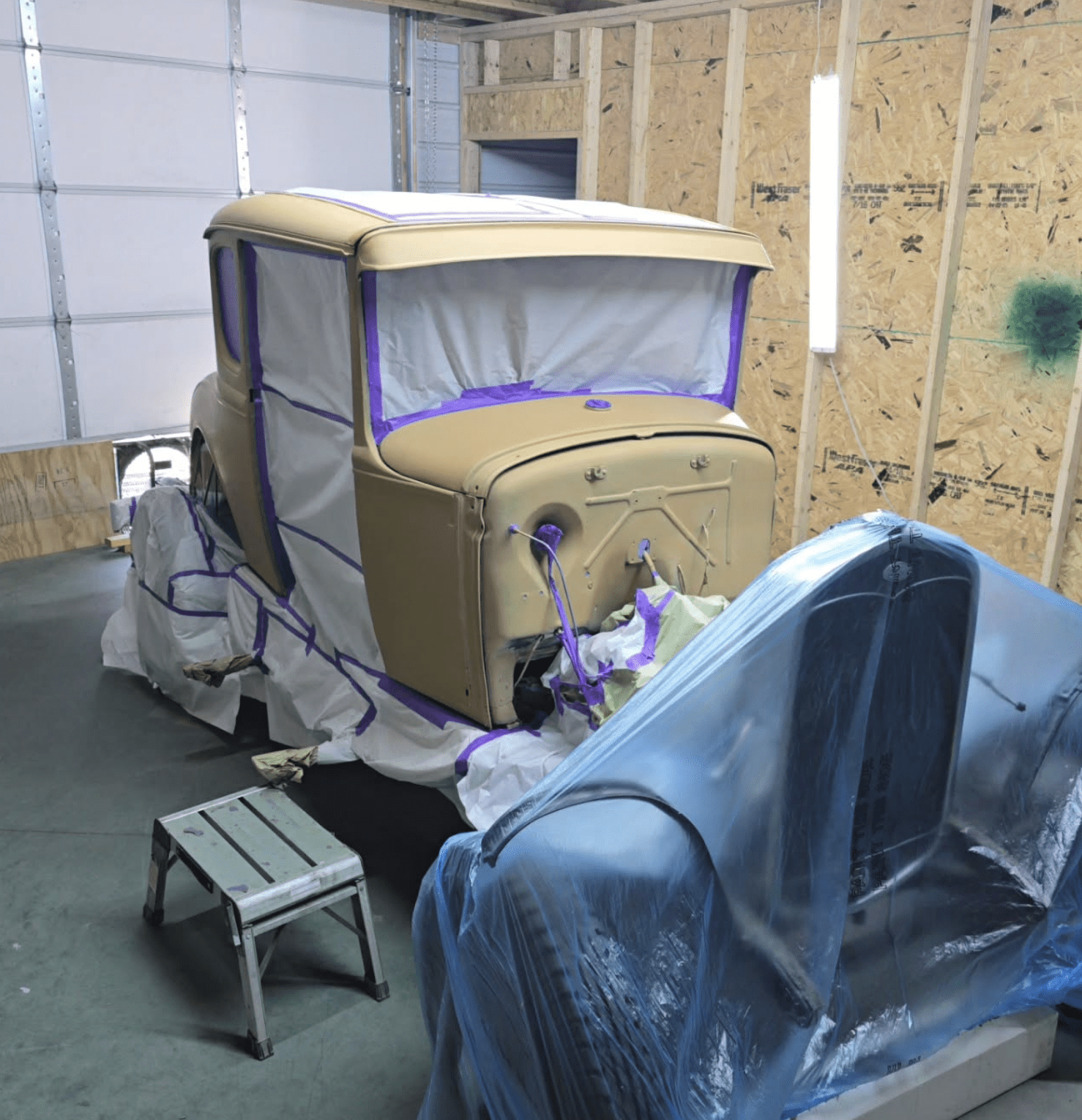
Overspray happens when paint drifts beyond its intended surface, landing on trim, glass, or nearby panels. Auto Art Restoration prevents this through proper masking, controlled spray environments, and correct gun distance and pressure. Once overspray cures on a surface, removing it safely takes real skill, not just solvent and elbow grease.
What Causes Overspray During Restoration Paint Work
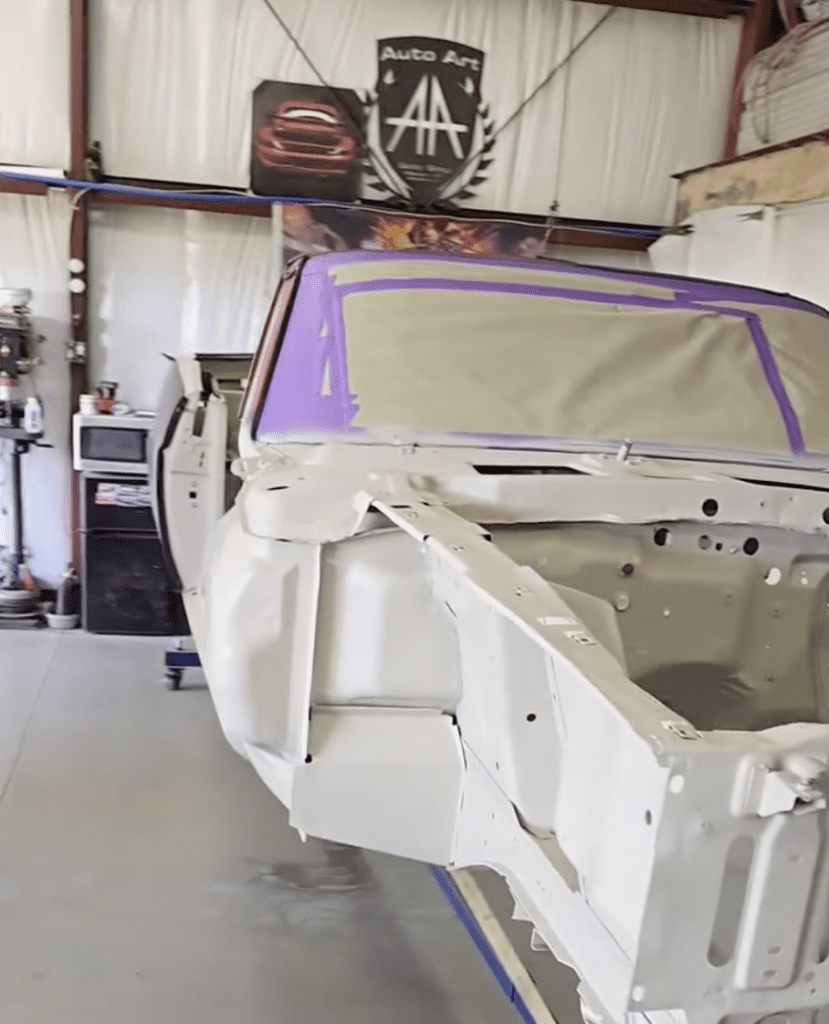
Overspray comes from paint particles that don’t land where the gun is aimed. Wind, incorrect gun settings, and poor masking all contribute to this problem.
- Spraying outside a controlled booth lets air currents carry paint particles unpredictably.
- Wrong gun distance or pressure atomizes paint too finely, letting it drift further.
- Incomplete masking leaves trim, glass, and hardware exposed to drifting paint.
Best Practices for Preventing Overspray
A controlled paint environment prevents more overspray problems than any single technique. This is why professional restoration shops invest in dedicated paint booths.
- Mask thoroughly, covering trim, glass, and adjacent panels completely before spraying starts.
- Maintain correct gun distance, typically six to eight inches from the surface.
- Control booth airflow to pull overspray away from the vehicle, not across it.
- Apply multiple thin coats rather than one heavy coat, reducing drift and runs together.
How Auto Art Controls Overspray on Every Project
We spray every restoration in a controlled paint environment built specifically for this work. Cure time and environmental control matter as much as the spray technique itself. Rushing either step increases the odds of a flawed finish.
What to Do If Overspray Already Happened
Cured overspray requires careful correction, not aggressive scraping or harsh solvents. Clay bar treatment often removes light overspray from glass and trim without damaging the surface underneath. Heavier overspray sometimes needs professional paint correction, especially on delicate trim or chrome. Attempting DIY removal with the wrong tools risks scratching surfaces permanently.
Protecting Your Restoration Investment
Overspray prevention comes down to controlled environment, correct technique, and patience during application. A rushed paint job costs far more to fix than it would have cost to do right the first time. Auto Art sprays every project in a dedicated booth with proper masking and cure time. If you’re curious what a full respray actually involves, our painting process walks through each stage. Ready to talk about your car’s paint work? Reach out through our contact form, and Cecil will respond personally within 48 hours.
Frequently Asked Questions
Can overspray be removed without damaging the original paint?
Often, yes. Light overspray usually responds well to clay bar treatment without harming the surface underneath.
Does overspray only affect the vehicle being painted?
No. Overspray can drift onto nearby vehicles or surfaces if a shop isn’t using a properly controlled booth.
Why does Auto Art use a dedicated paint booth?
A controlled booth manages airflow, temperature, and particle drift, all factors that prevent overspray from happening in the first place.
Is overspray more common with certain paint types?
Yes. Faster-drying paints and higher pressure settings tend to atomize more finely, increasing overspray risk.
How long should paint cure before handling the vehicle?
Cure times vary by paint system, but rushing this step risks damage and increases the odds of trapped overspray.
