
Where to Get a Fiberglass Car Body Repaired
September 15, 2026
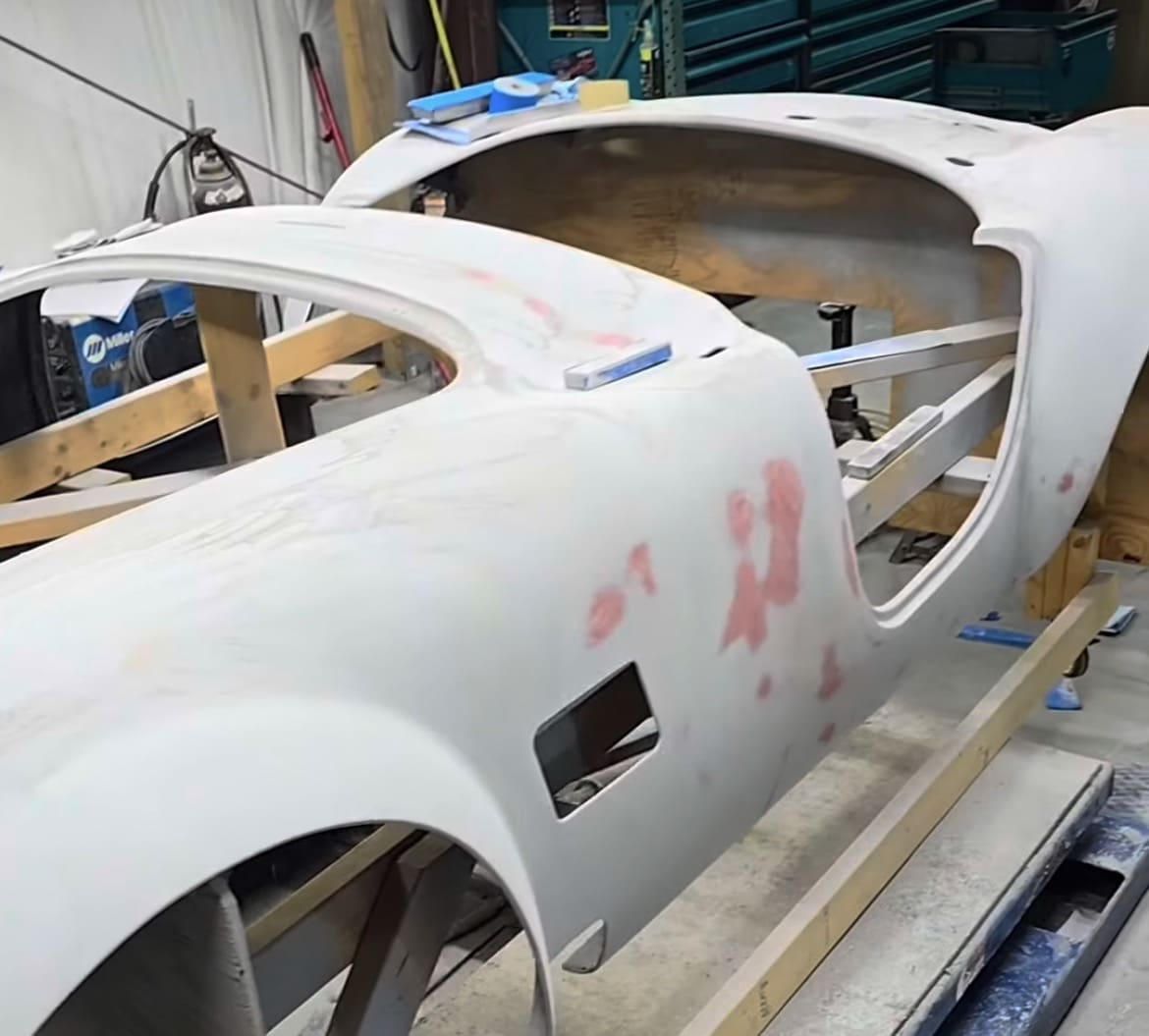
Short Answer: If you’re trying to find someone to repair a fiberglass car body, you’re probably already learning that most shops don’t want the job. Fiberglass behaves differently than steel, and it takes specific reinforcement and prep to hold up long-term. At Auto Art, we handle fiberglass repair out of our shop in Marion, Kentucky, and we ship cars in from across the country. The right shop reinforces stress points before they crack again instead of only patching the surface.
I get calls from people who’ve already been turned away by two or three body shops for the same reason. Nobody wants to touch fiberglass. Some shops won’t even quote it, and the ones that do often price it high enough to scare owners into just living with the cracks.
We’ve built our shop in Marion, Kentucky around exactly this kind of work. We ship cars in from all over the country because so few shops will take it on. I’ve watched too many half-finished kit cars sit under a cover for years, waiting on someone willing to do it right.
Here’s what to actually look for in a fiberglass repair shop and why the work is harder to find than it should be. Then I’ll walk through what a proper repair actually involves, and what happens once your car gets here.
What Should You Look for in a Fiberglass Repair Shop?
Fiberglass flexes and transmits stress differently than steel does. Mounting points, panel edges, and old repair areas are the first places that crack under vibration and heat cycling. That’s where the resin sees the most repeated flex over time. A shop that only fills a crack at the surface, without reinforcing what’s underneath, will watch it come back. It usually returns in the same spot within a season or two. That’s the single most common complaint I hear from owners who’ve already paid for a repair once.
Ask any shop you’re considering how they handle reinforcement at problem areas like mounting brackets and hinge points before finishing work begins. Retrofitting reinforcement after a crack already shows up is possible, but it’s never as strong as building it in from the start. The surrounding material has already fatigued once. A shop that can explain this process in specific terms, not just promise a smooth finish, is usually one that actually understands the material. If they can’t tell you what’s underneath the crack, they probably haven’t looked.
It also helps to ask how many fiberglass-specific jobs the shop has actually completed, versus how many steel panels they’ve painted. The two skills don’t automatically transfer. A painter who’s excellent on steel can still get burned by fiberglass’s flex characteristics if they’ve never worked with the material directly.
Why Are Fiberglass Specialists So Hard to Find?
Most body shops are built around steel collision work. Composite panels need different tools, different fillers, and a slower, more deliberate process than most shops are set up for. Fiberglass jobs get turned away, or quoted sky-high just to discourage the booking. Insurance-driven collision shops in particular are built for volume and fast turnaround. That’s close to the opposite of what a fiberglass kit car actually needs.
When we got our first fiberglass shell in the shop, we were surprised how few shops nationally were willing to take these projects on. The quotes our own customers had been given elsewhere were often astronomical, for work that didn’t even address the real problem underneath the crack. Some owners told us they’d been quoted more to fix a hairline crack than they’d originally paid for the whole kit.
We actually love this kind of work, and we’d rather take on a half-finished project than watch it sit in someone’s garage another year. That’s part of why we built nationwide transport into how we operate in the first place. Communities like the Kit Car Builders Club and Forgotten Fiberglass are full of owners trading the same story. Finding a shop that’ll actually take the job is the hard part.
What Actually Goes Into a Proper Fiberglass Repair?
Fiberglass-specific filler and a proper mechanical bond at the repair edges matter more than which brand of product gets used. A patch that only bonds to the surface tends to pop loose or crack again under normal flex. There’s nothing holding it to the material below once the top layer starts working loose. The edges have to be beveled and keyed into the surrounding material. That way the new layup actually becomes part of the panel, not just something stuck on top of it. Skipping that step is the single biggest reason repairs fail within a year.
Gel coat is a mold-release surface, not a true repair material. It’s also more brittle over time than a correctly applied paint system. UV exposure and temperature cycling only make that worse after a few seasons. For repair work, we favor filler, primer, and paint over trying to blend new gel coat into old. Matching cured gel coat’s exact color and sheen years later is close to impossible. Paint systems built for flex hold color and finish more consistently across a repaired panel.
Fiberglass kit bodies don’t share the same manufacturing tolerances as factory steel panels, so gaps and alignment often need manual adjustment before anything gets painted. Rushing this stage to get to the more rewarding paint work is one of the most common mistakes we see. It shows up on Cobra replicas and dune buggy bodies just as often as anything else that rolls through the shop. We’ve seen builds where panel gaps were never corrected because the shop wanted to reach the paint stage faster. Those gaps stay wrong for the life of the build, no matter how good the paint ends up looking.
Why Do We Ship Cars in From Across the Country?
We can transport a kit car from anywhere in the continental US to our shop and back once it’s finished. We built that into how we work because so few shops around the country actually do fiberglass well. Most owners simply don’t have one within a reasonable drive. Shipping a fiberglass body is more straightforward than most owners expect, since the panels are lighter than steel and travel well when properly secured.
If a half-finished kit car body is sitting in your garage because the local options fell through, we take on exactly that kind of project. It’s honestly some of our favorite work to do. We’ve had cars arrive that were started a decade earlier and abandoned once the owner realized the local shop wasn’t going to finish it correctly. Getting one of those projects back on the road is a different kind of satisfying than a straightforward repair.
What Happens When You Bring Your Car to Auto Art?
Every hour of work is billed at a flat $100 rate, the same as every other project in our shop. We walk you through a full evaluation before anything starts. That means checking every panel for prior repairs, hidden stress cracks, and areas where the gel coat has already started separating from the substrate underneath.
We won’t pretend the work is free. What we aim for is fair rates and a reasonably fast turnaround on every fiberglass project that comes through the door. We’ll tell you honestly if a panel needs full reinforcement or just a targeted repair. There’s no reason to sell someone a bigger job than their car actually needs.
If you’ve been quoted an astronomical number somewhere else, or told nobody does this kind of work anymore, get in touch. Let us take a look before you give up on the project. That can mean shipping the car to Marion, or just sending photos to start the conversation.
What Should You Do If a Fiberglass Repair Is Sitting Unfinished?
Fiberglass kit cars used to get treated like a lost cause once local shops turned them away. Plenty of half-finished projects have sat in garages for years because of it. They gather dust while the owner waits for a shop willing to take the job seriously.
Right now, we handle fiberglass repair and kit car finishing out of our shop in Marion, Kentucky. We ship cars in from across the country to do it. Every panel gets the same treatment, whether the car started life as a Cobra replica, a dune buggy, or something custom-built.
Going forward, a fiberglass body reinforced where it needs it holds its finish for years. A surface-level patch always eventually cracks again at the same spot.
If your project needs a real look, use the estimate tool on our pricing page. Or reach out directly, and I’ll personally respond within 48 hours.
FAQ
Do I have to bring the car in person, or can it be shipped?
You can ship it. We arrange transport from anywhere in the continental US to our shop in Marion, Kentucky, and back once the work is done. Fiberglass bodies typically travel easier than a steel-bodied car of the same size.
Can gel coat cracks be repaired without a full repaint?
Sometimes, if the crack is isolated and the surrounding gel coat is stable. Most repairs hold up better under paint than blended gel coat, though. Matching old gel coat’s exact color and sheen gets harder every year after the original cure. We’ll tell you honestly which approach fits your car once we’ve seen it.
How much does fiberglass body repair typically cost?
It depends on the scope, condition, and how much reinforcement the panels need. Every hour is billed at a flat $100 rate. We walk you through a full evaluation before giving you a number, rather than quoting blind off a phone description.
Do you only work on kit cars, or repair fiberglass panels on other vehicles too?
Both. Kit cars make up a lot of our fiberglass work, from Cobra replicas to dune buggies. We also repair fiberglass panels and body sections on other classics that come through the shop for full restoration or paint.
How do I get an evaluation started?
Reach out through our contact form with photos and a description of the project. I’ll personally respond within 48 hours to talk through next steps, whether that means scheduling transport or just answering questions first.
Follow us
Hours
BLOG
Address: Marion, KY
Email: Cecil@autoartrestoration.com
Phone: 270.704.7444
Quick Links
