
What’s Included in a Classic Car Restoration?
December 26, 2025
Classic car restoration is a meticulous, multi-phase journey that blends craftsmanship, engineering, and historical accuracy. From the initial evaluation to the moment the finished vehicle rolls out of the shop, every step requires specialized expertise and careful planning.
At Auto Art Restoration, each project is treated as a custom build, not a production job, ensuring the vehicle’s originality and value are preserved.
This step-by-step guide walks you through what truly happens behind the scenes during a professional restoration.
By the end, you’ll have a clear picture of what separates a true restoration from a surface-level rebuild.
In this article, you’ll explore:
- The initial evaluation and restoration planning phase
- Complete disassembly and documentation
- Bodywork, metal repair, and paint refinement
- Mechanical and electrical restoration
- Interior restoration and final assembly
- Testing, quality control, and project completion
Initial Vehicle Evaluation and Classic Car Restoration Planning
Every successful classic car restoration begins with a comprehensive evaluation.
This phase determines the scope, feasibility, and direction of the entire project. A professional shop starts by inspecting the vehicle’s structural integrity, drivetrain condition, body panels, interior components, and electrical systems. You should document rust damage, previous repairs, missing parts, and non-original modifications.
During evaluation, restorers work closely with the owner to define restoration goals. Some clients want a factory-correct, concours-level restoration, while others prefer a restomod approach that blends classic aesthetics with modern performance and comfort. These decisions directly impact timelines, parts sourcing, and overall cost.
A detailed restoration plan is then created, outlining each phase of work and establishing a realistic schedule. This planning stage is also when budgets are finalized and expectations are aligned. Skipping or rushing evaluation often leads to costly surprises later, which is why reputable restoration shops dedicate significant time to this step. According to industry experts like Hagerty, thorough pre-restoration assessments are one of the most important factors in a successful classic car project.
Complete Vehicle Disassembly and Documentation
Disassembly is where restoration truly begins—and where precision matters most.
Once planning is complete, the vehicle is carefully dismantled down to its bare shell. Every component is removed methodically, cataloged, photographed, and labeled. This documentation ensures accurate reassembly and helps identify which parts can be restored versus replaced.
This stage often reveals hidden issues not visible during the initial inspection, such as corrosion beneath trim, frame fatigue, or poorly executed past repairs. Discovering these problems early allows restorers to adjust the plan before major work begins.
Disassembly also sets the foundation for quality craftsmanship later. Original fasteners, brackets, and hardware are preserved whenever possible to maintain authenticity. For rare or discontinued components, this is when sourcing or fabrication strategies are developed.
At Auto Art Restoration, this process is handled with museum-level care, ensuring no detail is overlooked before the vehicle moves into structural repair.
Bodywork, Metal Repair, and Paint Refinement on Classic Cars
The body and paint phase defines both the appearance and integrity of a restored classic.
Once stripped to its shell, the vehicle undergoes extensive metal repair. Rusted or weakened sections are cut out and replaced with properly shaped steel panels. This work requires skilled metal fabrication to ensure strength, correct contours, and proper panel alignment.
Unlike cosmetic bodywork, true restoration focuses on metal first—not filler.
Doors, hoods, trunk lids, and fenders are test-fitted repeatedly to achieve factory-correct gaps and alignment. This process is time-intensive but essential for long-term durability and visual accuracy.
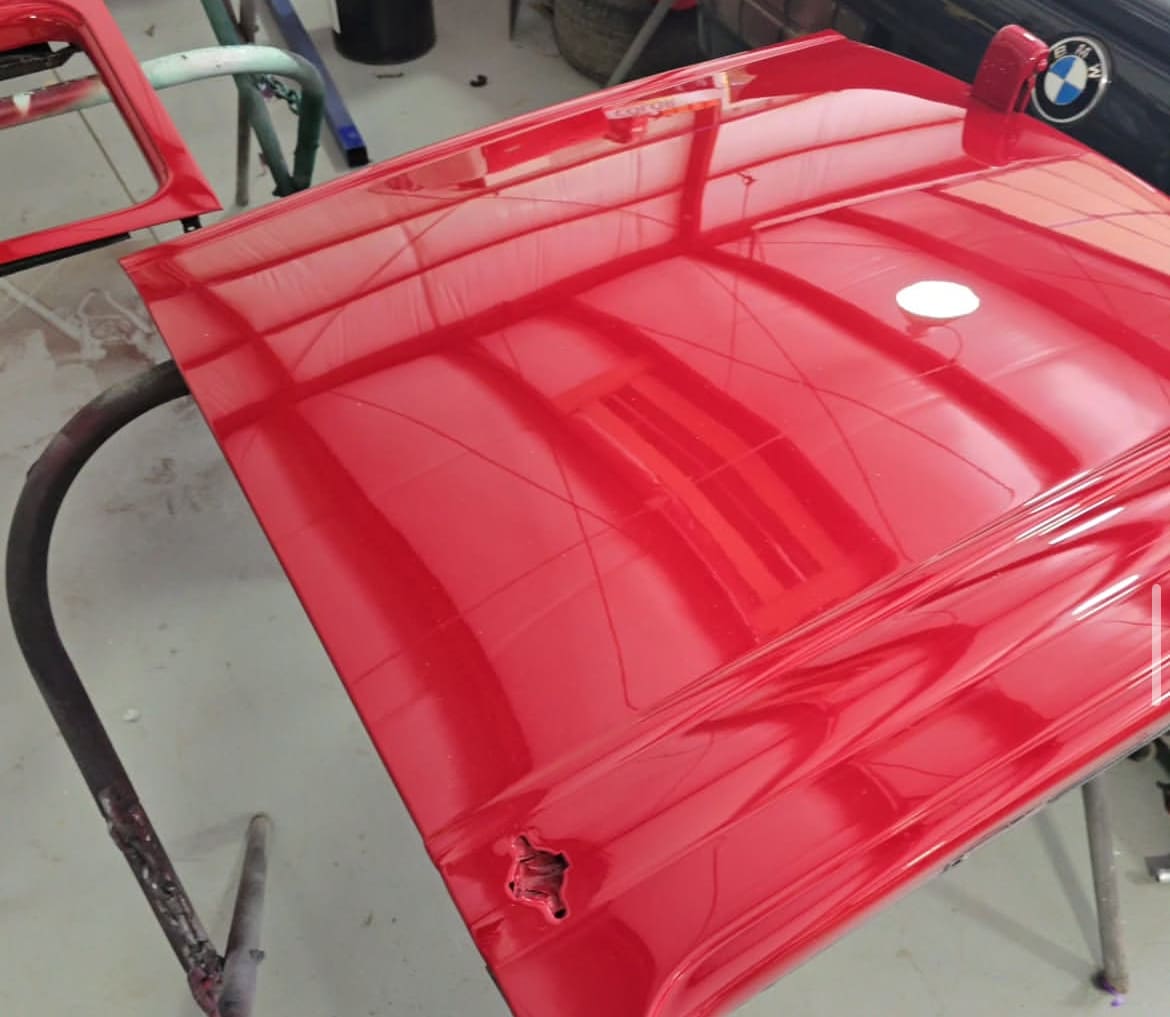
After metal repair, the body enters surface preparation. Multiple stages of sanding, priming, and blocking are used to refine the surface before paint is applied. Paint selection is equally important.
Whether matching an original factory color or recreating a period-correct finish, premium paint systems and controlled environments ensure depth, durability, and consistency. If you want to understand how proper refinishing protects long-term value, Auto Art Restoration’s car paint restoration page offers deeper insight into this critical stage.
Interior Restoration and Final Classic Car Assembly
Interior restoration brings comfort, craftsmanship, and authenticity together.
Seats, door panels, dashboards, carpeting, headliners, and trim are restored or recreated using correct materials, patterns, and techniques. Skilled upholstery work ensures stitching styles, textures, and colors align with the vehicle’s era and original design.
At the same time, final assembly begins. Restored mechanical systems, wiring, and interior components are carefully reinstalled. Chrome trim, glass, weather seals, and badges are fitted with extreme care to protect the finished paint and interior surfaces.
Final assembly is a slow, deliberate process. Each system is checked for fitment, function, and compatibility with surrounding components. This is where hundreds of individual restoration tasks come together, transforming a collection of parts into a cohesive, fully functional classic automobile.
Testing, Quality Control, and Project Completion
Before delivery, every restored classic undergoes extensive testing and refinement.
Initial startup procedures, system checks, and controlled road testing allow technicians to identify issues that only appear under real-world conditions. Suspension alignment, brake performance, engine tuning, and electrical behavior are closely monitored and adjusted.
Quality control inspections follow, covering everything from panel gaps and paint finish to interior fitment and drivability. Nothing is rushed at this stage, because minor adjustments now prevent major problems later. Only when the vehicle meets both shop standards and client expectations is the restoration considered complete.
Reputable restoration shops also provide guidance after delivery. Maintenance schedules, break-in procedures, and storage recommendations help owners protect their investment and enjoy their vehicle with confidence.
Your Next Steps to Classic Car Restoration
A full classic car restoration is a significant undertaking, but with the right planning and expertise, it’s an incredibly rewarding one. Understanding each phase—from evaluation through final testing—empowers you to make informed decisions and avoid costly surprises. Whether your goal is concours-level authenticity or a beautifully restored driver, the right restoration partner makes all the difference. If you’re ready to begin your journey, contact Auto Art Restoration today to schedule an evaluation and take the first step toward bringing your classic car back to life.
FAQ:
A full classic car restoration typically includes evaluation, complete disassembly, metal and body repair, paint refinement, mechanical and electrical restoration, interior restoration, final assembly, and road testing. The goal is to return the vehicle to factory-correct or owner-defined condition with long-term reliability.
Most full restorations take between 12 and 24 months. Timelines depend on the vehicle’s starting condition, the amount of metal repair required, parts availability, and whether the goal is a concours-level or driver-quality restoration.
Costs vary widely based on scope and condition, but professional classic car restoration often ranges from tens of thousands to six figures. A detailed evaluation is the only way to establish an accurate budget and avoid surprises.
Yes. Owners can choose a factory-correct restoration that preserves originality or a restomod that adds modern reliability, safety, or performance while retaining a classic appearance. You should define this choice during the planning phase.
Yes, rust repair is extremely common in classic vehicles. Proper restoration involves removing rusted metal and replacing it with correctly fabricated steel, not simply covering damage with filler.
You should contact a professional shop as soon as you’re serious about restoring a vehicle. Early evaluation by experts like Auto Art Restoration helps determine feasibility, budget, and the best restoration approach before costly mistakes are made.
Follow us
Hours
BLOG
Address: Marion, KY
Email: Cecil@autoartrestoration.com
Phone: 270.704.7444
Quick Links
