
Common Problems With Aging Fiberglass Car Bodies
September 22, 2026
Short Answer: Aging fiberglass car bodies most often develop six problems. These are gelcoat crazing, stress cracks at mounting points, and moisture blistering. Add UV fading, print-through of the weave, and hidden damage from old filler repairs. None of these mean the car is unsavable. Fiberglass doesn’t rust, but it does age. Most of these issues trace back to a shop skipping proper prep the first time.
You’ve probably heard fiberglass cars don’t have “real” problems, since they can’t rust like a steel body. That’s true as far as it goes. It’s also why a lot of owners get blindsided. Fiberglass ages in its own way. Most people don’t know what to look for. A hairline crack can quietly turn into a soft spot or a bubble under the paint.
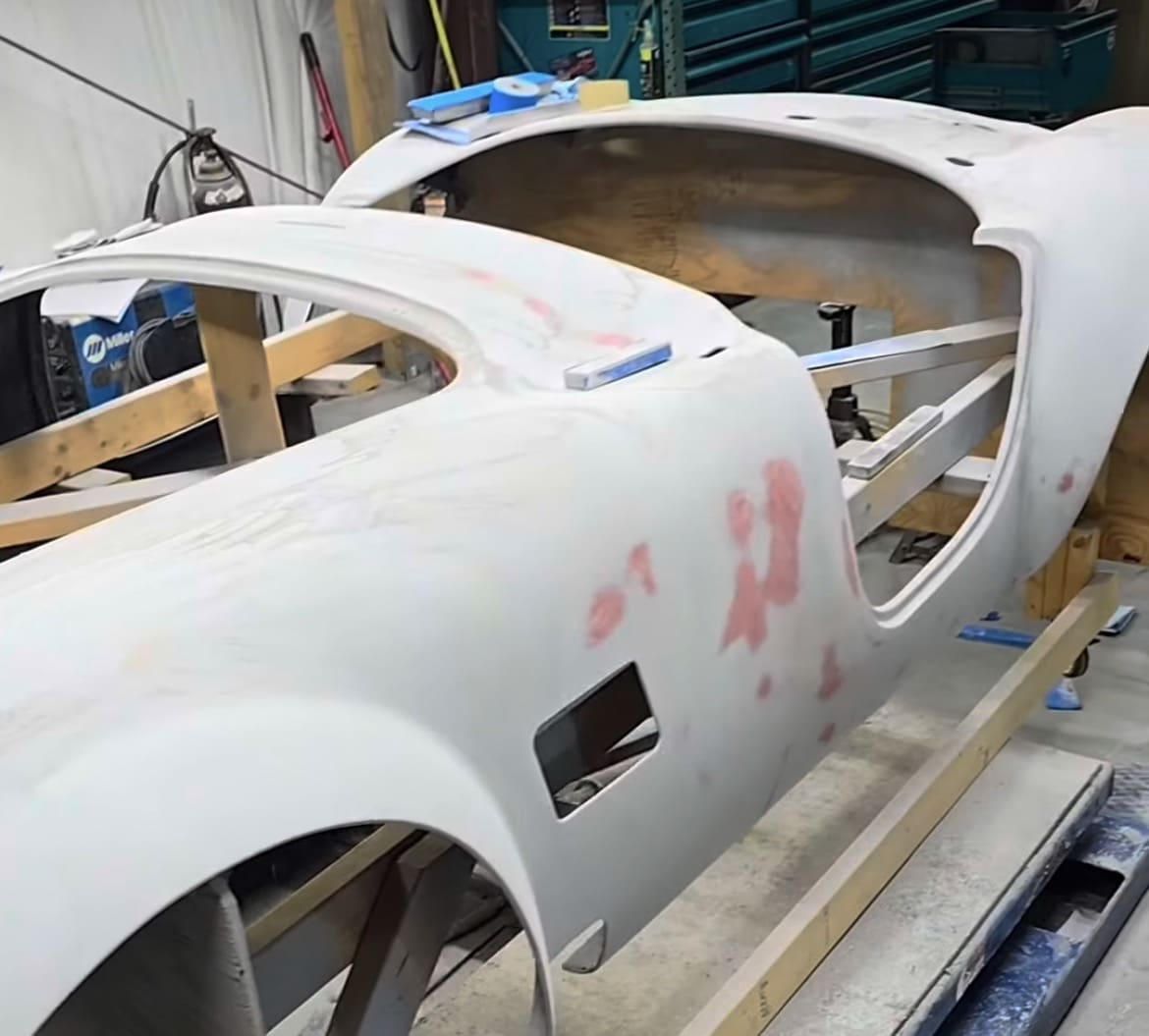
We see this from the shop side at Auto Art. Fiberglass shells and kit cars come through our doors regularly. They often arrive after sitting outside for years or getting patched by someone without the right materials. This article covers the six problems we see most, and what an honest repair actually looks like for each one.
What’s the Most Common Problem With an Aging Fiberglass Body?
Problem 1: Gelcoat Crazing and Spider Cracking
Gelcoat is the thin, glossy top layer on a fiberglass panel. It’s the first thing to crack as the car ages. Decades of temperature swings and UV exposure make that layer brittle. Fine cracks radiate out from stress points like fender lips, cowls, and trunk lids.
Crazing usually stays cosmetic at first. Left alone, moisture works into the cracks. The damage then spreads deeper into the laminate underneath.
- Sign: a web of fine cracks, often worse on horizontal panels that catch the most sun
- Cause: gelcoat flexing with age instead of holding its shape
- Fix: sand back to good material, confirm the crack hasn’t reached the laminate, then reseal or repaint
Problem 2: Stress Cracks at Mounting Points and Seams
Fiberglass panels flex slightly under vibration, and that flex concentrates at bolts, hinges, and body seams. Without proper backing, the resin cracks at those exact points. Sometimes it’s visible; sometimes it’s hidden under trim.
These cracks tend to repeat in the same spots even after a cosmetic patch. Nobody addressed the underlying flex.
- Sign: cracks that keep returning at the same bolt hole or hinge point
- Cause: no reinforcement behind a high-stress mounting area
- Fix: add fiberglass matting and a backing plate behind the mount, not just filler on top
Problem 3: Moisture Absorption and Blistering
Fiberglass resin isn’t fully waterproof, and over decades moisture works into tiny voids in the laminate. Trapped moisture reacts with the resin. It pushes up small, pressurized blisters under the surface. Boat owners call the same problem gelcoat pox.
Blistering almost always means the gelcoat barrier failed somewhere, even if the failure point isn’t obvious.
- Sign: small raised bumps or soft spots, often near the rocker panels or lower body
- Cause: moisture trapped between the gelcoat and the laminate
- Fix: grind out each blister, let the laminate dry fully, then fill and reseal with a proper barrier coat
Problem 4: UV Fading, Chalking, and Oxidation
UV light breaks down the resin binder in gelcoat over years, leaving pigment exposed as chalky residue. This is the most visible sign of an aging fiberglass body. Owners often mistake it for something a simple wax job can fix.
Light chalking buffs out. Deep fading usually means the gelcoat itself is too far gone to save.
- Sign: a dull, powdery finish that rubs off white on a cloth
- Cause: years of UV exposure with no wax or protectant
- Fix: compound and buff for light cases; full repaint for advanced fading
Problem 5: Print-Through of the Underlying Weave
As gelcoat thins with age, the texture of the fiberglass cloth underneath can show through the surface. This shows up as a faint weave pattern under direct light. It happens even when the paint itself looks intact.
Print-through is cosmetic, not structural. It’s still a clear sign the original gelcoat layer was thin or has worn down.
- Sign: a faint crosshatch pattern visible under the paint in bright light
- Cause: gelcoat too thin to fully hide the weave beneath it
- Fix: build the surface back up with filler and primer, block-sand true, then repaint
Problem 6: Hidden Damage From Poor Prior Repairs
A lot of fiberglass bodies carry old repairs where someone hid a crack with filler instead of fixing it. Filler bonds to the surface, not the structure. It hides the problem without ever solving it.
This is the problem we run into most on cars that already had “work done” before they reached us.
- Sign: a repair that looks fine but flexes or cracks again within a year or two
- Cause: filler applied over a crack instead of proper fiberglass reinforcement
- Fix: grind out the old filler completely, inspect the real laminate underneath, then repair it structurally first
How Do You Know If Fiberglass Damage Is Cosmetic or Structural?
Press on the area near the crack or crazing. If it flexes, feels soft, or sounds hollow, the damage likely went past the gelcoat. A purely cosmetic crack won’t move under light pressure. When in doubt, have a shop that works on fiberglass bodies and kit cars take a real look. That beats spending money on a cosmetic fix that won’t hold.
Fiberglass doesn’t rust, and that’s a genuine advantage over steel-bodied classics. It still ages, and most of the six problems above trace back to one root cause. Someone covered up the problem instead of fixing it. Hagerty’s own writers found the same thing restoring their fiberglass project cars. Painting one correctly takes real time, because shortcuts show up fast on this material. We’d rather tell you honestly what a repair needs than sell you a patch that cracks again next season. If your fiberglass project needs a real look, reach out to Auto Art. We’ll walk through what your car actually needs.
Frequently Asked Questions
Can you repair a cracked fiberglass car body instead of replacing it?
Yes, in almost every case. Fiberglass repairs by rebuilding the laminate layer by layer, then regelling or repainting the surface. Full panel replacement is rare outside of severe accident damage.
Is fiberglass more durable than metal for a car body?
Fiberglass never rusts, which is a real advantage in humid climates. It’s more prone to cracking under impact and needs different repair techniques than steel. Durability depends on the specific problem.
How much does gelcoat repair typically cost?
Cost depends on how much of the panel needs attention and whether damage reached the laminate. A small cosmetic crack costs far less than blistering or print-through across a whole panel.
Can you paint directly over old fiberglass gelcoat?
Only if the gelcoat is sound and properly prepped. Cracked, chalky, or blistered gelcoat needs repair first. Otherwise the same problems will show through the new paint within a season or two.
How long does a fiberglass body panel usually last?
Decades, if it’s maintained. Regular waxing protects the gelcoat from UV damage. Catching small cracks early keeps moisture from ever reaching the laminate underneath.
Why do fiberglass repairs sometimes crack again after a shop fixes them?
Usually because the repair only addressed the surface. Filler over a crack looks fine short-term. The underlying flex or moisture issue is still there until it’s reinforced properly.
Follow us
Hours
BLOG
Address: Marion, KY
Email: Cecil@autoartrestoration.com
Phone: 270.704.7444
Quick Links
